






























Nose Piercing Names & Types: Your Complete Location Map Guide
Stack & Save: Extra 15% with Jissbon15
Jissbon15
Nose piercings encompass over ten distinct styles, each with specific names, locations, and jewelry requirements. From the classic nostril stud to the dramatic nasallang bar, understanding placement differences, healing timelines, and technical names helps you communicate clearly with piercers and choose the perfect style for your aesthetic.
This comprehensive map-style guide breaks down every nose piercing type, proper terminology, and what makes each unique.
What Nose Piercings Symbolize (Culturally & Aesthetically)
While the primary function of a nose piercing today is aesthetic, many styles carry cultural or symbolic associations. The nostril piercing is linked to South Asian traditions and is sometimes associated with femininity, beauty, and Ayurveda. The septum piercing often signals boldness or alternative subculture identity and historically appeared in warrior communities worldwide.
High nostril and double nostril configurations convey symmetry and refinement, while bridge or rhino piercings present a more experimental, avant-garde energy. These meanings are not rules—your personal expression matters more than any traditional symbolism—but understanding context helps many people choose a style that reflects their identity.
Best Jewelry Styles for Each Nose Piercing
Different placements suit different jewelry shapes. The right pairing ensures comfort, proper healing, and aesthetic balance.
Nostril piercings work best with lightweight studs during healing and small hoops after healing. L-bends, screws, and flat-backs reduce irritation.
Septum piercings accommodate circular barbells, captive bead rings, and ornate clickers. Horseshoes remain the most versatile because they can flip upward for concealment.
High nostril piercings almost always require studs, not rings, due to the high placement and curvature of the nose.
Bridge piercings use straight barbells only, while nasallang and Austin bar piercings require longer, perfectly straight barbells for stability.
Rhino and septril piercings use curved barbells because of their vertical or angled placement.
Choosing the incorrect jewelry shape often leads to pressure points or migration, so always follow your piercer’s guidance.
Complete Nose Piercing Map & Terminology
Visual Location Guide
Upper nose area (bridge/between eyes):
- Bridge piercing (Earl piercing)
Nasal bridge (sides above nostrils):
- High nostril piercing
Nostril area (sides of nose):
- Standard nostril piercing
- Double/triple nostril piercings
Septum area (center cartilage):
- Septum piercing (bull ring)
- Stretched septum (for septril piercing)
Nose tip:
- Austin bar (horizontal through tip)
- Nasallang (through both nostrils and septum)
- Rhino/vertical tip piercing
- Septril (requires stretched septum)
These piercings create different aesthetics and require varying commitment levels.
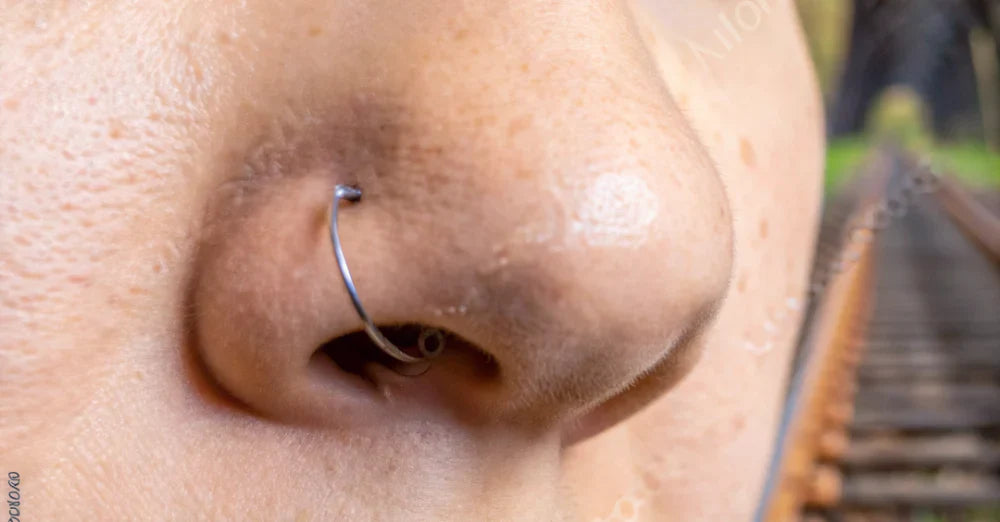
Standard Nostril Piercing: The Classic Choice

What It's Called
Official name: Nostril piercing
Common references:
- Nose stud (when wearing stud jewelry)
- Nose ring (when wearing hoop jewelry)
- Side nose piercing
- Traditional nose piercing
Location Details
Placement specifics:
- Through the curve of either nostril
- Typically positioned at widest part of nostril curve
- Can be placed higher or lower based on preference
- Left or right side (no "correct" side)
Placement considerations:
- Natural crease of nostril provides best positioning
- Too high looks awkward with anatomy
- Too low limits jewelry options
- Piercer marks placement for your approval before piercing
Procedure Expectations
Gauge size: 18G or 20G (thinner than most body piercings)
Piercing method:
- Professional needle piercing (recommended)
- Piercing gun (not recommended—causes trauma and uneven healing)
Pain level: 4-6 out of 10 for most people
Healing time: 4-6 months average
Jewelry Options
Initial healing jewelry:
- Labret stud (flat back, most comfortable)
- L-bend nose stud
- Nose screw (corkscrew shape)
After healing:
- Nose hoops (seamless, segment, or captive bead)
- Decorative studs (gems, shapes, colors)
- Nose bones (ball on end prevents fallout)
- Fashion rings
Similar to choosing between bullet vibrators and wand vibrators for different sensations, nostril jewelry styles offer varied aesthetics and comfort levels.
Septum Piercing: The Bold Statement
What It's Called
Official name: Septum piercing
Popular nicknames:
- Bull ring (most common slang)
- Bull nose piercing
- Center nose piercing
Why "bull ring": Resembles rings used in livestock nose piercing
Anatomical Location
Where it goes:
- Through the soft tissue below nasal cartilage
- "Sweet spot" between cartilage and bottom of nose
- Does NOT go through hard cartilage (painful and incorrect)
- Centered between nostrils
Sweet spot anatomy:
- Thin membrane of skin called columella
- Thinner and less painful than cartilage
- Varies in size between individuals
- Some people have minimal sweet spot (piercing more difficult)
Procedure Details
Gauge size: 16G or 14G (thicker than nostril)
Healing time: 6-8 weeks to 3 months
Pain level: 2-7 out of 10 (varies dramatically—sweet spot = less pain)
Unique aspect: Can be hidden by flipping jewelry up into nose
Jewelry Styles
Common options:
- Circular barbells/horseshoe rings (most popular, flippable)
- Captive bead rings
- Seamless rings
- Segment rings
- Clickers (hinged for easy insertion)
Stretching potential: Many stretch septums to larger gauges over time (4G, 2G, 0G, etc.)
High Nostril Piercing: The Elevated Look

What Defines "High Nostril"
Official name: High nostril piercing
Also called:
- Upper nostril piercing
- High nose piercing
Key difference from standard nostril: Placed significantly higher on nasal bridge, closer to eye area than standard nostril position.
Placement and Anatomy
Location specifics:
- Upper portion of nostril curve
- Near where nose meets under-eye area
- Often paired with standard nostril for layered look
- Requires sufficient nostril height
Healing challenges:
- Less blood flow in upper nose area
- Longer healing time than standard nostril
- More prone to irritation bumps
- Jewelry must be downsized after initial swelling
Healing time: 6-9 months
Jewelry Considerations
Best options:
- Flat-back labret studs (most comfortable)
- L-bend studs
- Small decorative ends
Avoid:
- Hoops (difficult to insert in high placement)
- Heavy jewelry (increases migration risk)
Multiple Nostril Piercings: Curated Clusters
Common Configurations
|
Configuration |
Description |
Aesthetic |
|
Double nostril (one side) |
Standard + high nostril on same side |
Stacked, layered look |
|
Double nostril (both sides) |
One standard nostril on each side |
Symmetrical, balanced |
|
Triple nostril |
Three piercings on one side |
Dramatic, clustered style |
|
Paired high nostril |
High nostril on both sides |
Sophisticated symmetry |
Planning Multiple Piercings
Timing considerations:
- Pierce one at a time (6+ months apart) OR
- Pierce multiple simultaneously (all heal together)
- Don't add new piercing to half-healed piercing
Spacing guidelines:
- Allow 5-8mm between piercing sites
- Consider jewelry size when planning spacing
- Map placement before first piercing
Jewelry coordination:
- Matching metals (all gold, all silver)
- Graduated sizes (small to large)
- Mixed styles (studs and hoops)
Bridge Piercing: Between the Eyes

What It's Called
Official name: Bridge piercing
Alternative names:
- Earl piercing (after Earl Van Horn, who popularized it)
- Erl piercing
- Eyebrow bridge piercing
Location and Anatomy
Placement:
- Horizontal through bridge of nose
- Between eyes, above nose bridge
- Surface piercing through skin, not cartilage
Unique challenges:
- High rejection risk (surface piercing)
- Glasses can cause irritation
- Visible in professional settings
- Requires specific anatomy for success
Healing time: 8-12 weeks
Jewelry: Straight or curved barbell
Risks and Considerations
- Migration and rejection common
- Can leave noticeable scars
- Interferes with eyeglasses
- Requires excellent aftercare
- Not suitable for everyone's facial structure
Austin Bar: Horizontal Nose Tip
What Makes Austin Bar Unique
Official name: Austin bar piercing
Key characteristic: Passes horizontally through tip of nose but avoids septum entirely.
Visual effect: Barbell visible on both sides of nose tip
Anatomical Path
Piercing route:
- Enters one nostril
- Exits opposite nostril
- Goes through skin tissue only
- Does NOT pass through septum cartilage
Vs. nasallang: Nasallang goes through septum; Austin bar does not
Healing time: 2-3 months
Jewelry: Straight barbell only
Nasallang: The Tri-Nasal Piercing
Understanding the Nasallang
Official name: Nasallang piercing
Technical definition: Single barbell passing through both nostrils AND the septum simultaneously.
What this means: Three piercings in one procedure—left nostril, septum, right nostril.
Procedure and Healing
Process:
- Requires extremely precise alignment
- Three separate tissues pierced
- Must be perfectly straight for jewelry to sit correctly
- Most painful nose piercing option
Healing time: 4-6 months minimum
Pain level: 8-9 out of 10
Jewelry: Long straight barbell (measures 1.5-2 inches typically)
Major Considerations
- Three healing wounds simultaneously
- Difficult to clean
- Can't remove jewelry during healing
- Complicates blowing nose
- Significant commitment
- Not all piercers perform this
This advanced piercing requires similar research and commitment as selecting specialized pleasure products like prostate massagers—understanding anatomy and functionality is essential.
Rhino Piercing: Vertical Nose Tip
What It's Called
Official name: Rhino piercing
Alternative names:
- Vertical nose tip piercing
- Vertical tip piercing
Why "rhino": Resembles a rhinoceros horn placement
Unique Anatomy
Piercing path:
- Enters at tip of nose
- Exits through skin above septum
- Vertical orientation
- Surface-to-surface piercing
Visibility: Front-facing barbell ends visible
Healing time: 6-12 months
Jewelry: Curved barbell
Special Challenges
- Prone to migration/rejection
- Difficult angle to pierce correctly
- Limited jewelry movement
- Can affect breathing sensation
- Scars visible if removed
Septril: The Advanced Modification
What Makes Septril Unique
Official name: Septril piercing
Requirements: Must have stretched septum first (usually 2G or larger)
Concept: Combines stretched septum with vertical piercing from nose tip into stretched hole.
Two-Stage Process
Stage 1: Septum stretching
- Begin with standard septum piercing
- Gradually stretch over months/years
- Reach minimum 6mm (2G) diameter
Stage 2: Septril addition
- Pierce from bottom of nose tip
- Feed jewelry up through stretched septum
- Creates stacked look
Total time investment: 1-2+ years
Jewelry: Curved barbells, plugs, or specialized septril jewelry
Nose Piercing Comparison Table
|
Piercing Type |
Location |
Pain (1-10) |
Healing Time |
Rejection Risk |
Professional Setting |
|
Nostril |
Side of nose |
4-6 |
4-6 months |
Low |
Moderate (small jewelry) |
|
Septum |
Center cartilage |
2-7 |
6-8 weeks |
Low |
Good (flippable) |
|
High nostril |
Upper nose side |
5-7 |
6-9 months |
Moderate |
Difficult to hide |
|
Bridge |
Between eyes |
6-7 |
8-12 weeks |
High |
Very visible |
|
Austin bar |
Horizontal tip |
7-8 |
2-3 months |
Moderate |
Difficult to hide |
|
Nasallang |
Through all three |
8-9 |
4-6 months |
Moderate |
Difficult to hide |
|
Rhino |
Vertical tip |
7-8 |
6-12 months |
High |
Difficult to hide |
Choosing the Right Nose Piercing for You
Consider Your Lifestyle
Professional environment:
- Nostril with subtle stud (most workplace-friendly)
- Septum (can flip up to hide)
- Avoid bridge, nasallang, rhino, Austin bar
Active lifestyle:
- Simple nostril or septum
- Avoid surface piercings prone to snagging
- Consider healing time before athletic events
Pain tolerance:
- Low tolerance: Septum (if sweet spot hit), nostril
- Moderate tolerance: High nostril, Austin bar
- High tolerance: Nasallang, rhino, bridge
Anatomy Matters
Consult professional piercer to assess:
- Septum sweet spot size
- Nostril thickness and curve
- Facial structure for bridge placement
- Nose tip anatomy for rhino/Austin bar
- Overall facial balance with chosen piercing
Not everyone can get every piercing type. Anatomy determines candidacy.
Universal Aftercare Guidelines
Daily Cleaning Routine
For all nose piercings:
- Wash hands thoroughly
- Spray saline wound wash on piercing (both sides)
- Let sit 30-60 seconds
- Gently pat dry with clean paper towel
- Repeat 2x daily
What NOT to do:
- Don't twist or rotate jewelry
- Avoid touching with unwashed hands
- No makeup on/around healing piercing
- Don't remove jewelry during healing
- Skip harsh products (alcohol, hydrogen peroxide)
Activity Restrictions
Avoid during healing:
- Swimming pools, hot tubs, natural water
- Face-down sleeping (pressure on healing piercing)
- Nose picking or aggressive nose blowing
- Changing jewelry before fully healed
- Smoking (significantly delays healing)
Quality aftercare matters as much for piercings as choosing body-safe materials does for intimate products from Jissbon—both require attention to safety and proper care.
Jewelry Material Safety
Body-Safe Options
Best materials for nose piercings:
- Implant-grade titanium (Ti6Al4V ELI) – Hypoallergenic, ASTM F136 certified
- 14k or 18k solid gold – Nickel-free, biocompatible
- Niobium – Great alternative to titanium
- Platinum – Inert, expensive
- Medical-grade stainless steel – Budget option (some nickel sensitivity)
Avoid during healing:
- Plated jewelry (coating wears off)
- Sterling silver (tarnishes, reacts with body)
- Low-quality gold (high nickel content)
- Acrylic or plastic
- Mystery metals
Finding the Right Piercer
What to Look For
Professional piercer qualities:
- APP (Association of Professional Piercers) membership
- Portfolio showing your desired piercing type
- Clean, sterile studio environment
- Autoclave for sterilization
- Single-use needles only (never guns except lobe)
- Consultation before piercing
- Clear aftercare instructions provided
- Follows safety protocols
Questions to Ask
- How long have you been piercing?
- Do you have experience with [specific piercing type]?
- What jewelry material do you use for initial piercing?
- Can I see your sterilization setup?
- What aftercare do you recommend?
- What's your policy on touch-ups or complications?
Frequently Asked Questions
What is the most popular nose piercing?
The nostril piercing is by far the most common worldwide. It suits most nose shapes, offers many jewelry styles, heals reliably, and works in both casual and professional settings. The septum is the second most popular due to its versatility and ability to hide the jewelry when flipped up.
Is a septum piercing considered a nose piercing?
Yes. The septum piercing passes through the soft tissue between your nostrils and is one of the main categories of nose piercings. It differs from nostril piercings because it sits centrally and uses circular jewelry instead of studs.
What is the correct name for an Indian nose ring?
Traditional South Asian nose rings are often called a nath (large hoop) or laung (small stud). These adornments carry cultural and ceremonial significance and vary by region and community.
Is it called a nose ring or a nose hoop?
Both terms are correct. “Nose ring” is the casual umbrella term, while “nose hoop” specifically refers to circular jewelry worn in nostril or septum piercings. Stud jewelry is typically called a nose stud, nose bone, or nose screw.
How do I know which nose piercing suits my face?
It depends on your anatomy and aesthetic goals. Nostril piercings flatter almost every face. Septum piercings suit people with a defined septal sweet spot and balanced nose shape. High nostril and bridge piercings complement sharper facial features, while rhino and nasallang piercings work best on noses with adequate tissue support. A professional piercer can assess your structure and recommend ideal placements.
What is the least painful nose piercing?
Septum piercings typically hurt least when done correctly through the "sweet spot"—the thin tissue below cartilage. Many rate it 2-4 out of 10. Standard nostril piercings are also relatively mild at 4-6 out of 10. High-pain options include nasallang (8-9), rhino (7-8), and bridge (6-7).
Can you get multiple nose piercings at once?
Yes, though healing becomes more complex. You can get 2-3 piercings simultaneously, but your immune system handles fewer healing wounds better. Many prefer spacing piercings 6+ months apart. Multiple simultaneous piercings increase swelling, pain, and infection risk. Consult your piercer about your specific plan.
How long until I can change my nose jewelry?
Minimum 6-8 weeks for septum; 4-6 months for nostril piercings. High nostril and complex piercings need 6-9+ months. Changing too early risks infection, irritation bumps, and prolonged healing. Always have a professional perform your first jewelry change to ensure proper technique.
Which side should I pierce my nostril?
No "correct" side exists—it's purely personal preference. Consider which side you photograph from most, your natural hair part, or other facial piercings for balance. Some cultures traditionally favor left (related to Ayurvedic medicine), but this isn't universal. Choose what feels right aesthetically for you.
Do nose piercings close up if you remove them?
Depends on healing time. Fresh piercings (under 6 months) close within hours to days. Fully healed piercings shrink but may stay open for weeks to months. Long-term piercings (years old) often maintain small holes indefinitely. Septum piercings close fastest due to blood flow.
Can I hide my nose piercing for work?
Septum piercings flip up inside nostrils to hide. Nostril piercings can use clear retainers (after healing) or small flesh-toned studs. Bridge, nasallang, rhino, and Austin bar piercings cannot be effectively hidden. Consider workplace policies before choosing piercing type and placement.
Making Your Nose Piercing Choice
Understanding proper terminology, exact placement locations, and realistic healing expectations helps you communicate clearly with piercers and choose the nose piercing style that fits your aesthetic goals and lifestyle.
Ready to explore more body-safe products designed with quality and care? Browse sex toys for women, sex toys for men, or sex toys for couples crafted with the same material standards you should demand from piercing jewelry.


Looking for something else?
What Is Flogging in Sex? Complete BDSM Flogging Guide
LEARN MORE
What Does Overstimulated Mean Sexually? Causes & Solutions
LEARN MORE
Can You Get a Tattoo on Your Vagina? Safety, Pain & What to Expect
LEARN MORE
Public Sex Kink: Understanding Exhibitionism & Safe Exploration
LEARN MORELooking for something else?

A-Spot Orgasm: Best Positions & How to Find It
LEARN MORE
Bondage Play: Complete Beginner's Guide to Rope BDSM
LEARN MORE
Vibrator Stories: Real Experiences, Tips & What to Expect
LEARN MOREYou may also like
20% off

20% off

20% off

20% off

20% off

20% off

Further reading

How to Clean an Automatic Blowjob Machine Without Damaging the Motor
Remote-Controlled Automatic Masturbators for Couples and Solo Play
Best Automatic Strokers for Edging and Stamina Training