









































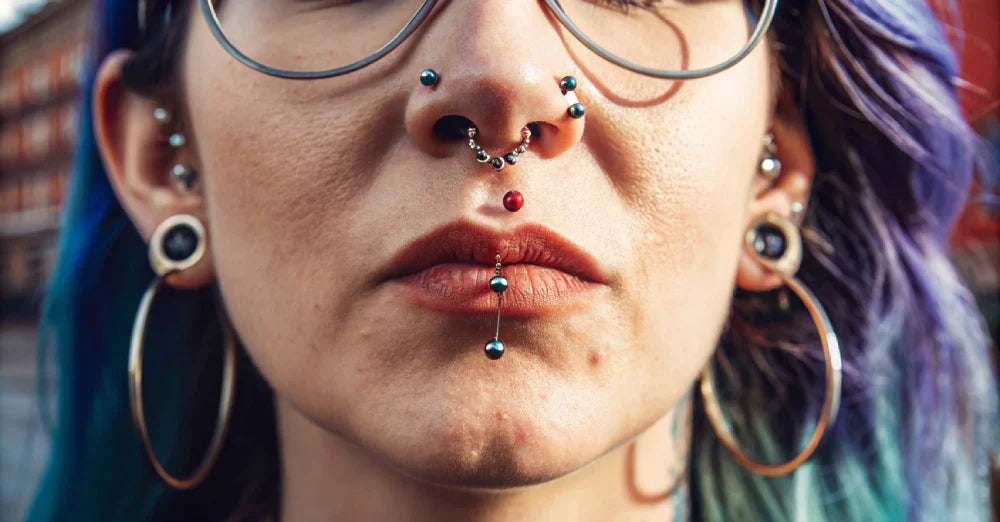
What Is a Labret Piercing? Everything You Need to Know
Stack & Save: Extra 15% with Jissbon15
Jissbon15
A labret piercing is a type of facial piercing positioned below the lower lip, typically centered between the lip and chin. The term "labret" (pronounced "LAY-bret") originally referred to a specific style of body jewelry, but now commonly describes this entire category of lower lip piercings.
This versatile modification suits various aesthetic preferences, from subtle elegance to bold statements, and can be customized with different jewelry styles ranging from simple studs to decorative gems or rings.
Understanding placement variations, pain expectations, healing timelines, and proper aftercare helps you make informed decisions about whether this piercing fits your lifestyle and how to maintain it successfully.
Standard Gauge, Size & Jewelry Fit
What Gauge Is a Labret Piercing?
Most labret piercings are performed at 16G (1.2mm), which provides stability during healing and accommodates a wide range of jewelry. Some piercers may use 14G (1.6mm) for thicker tissue or users who prefer a bolder look. Vertical labrets occasionally use 16G or 14G curved barbells, depending on anatomy.
Jewelry length matters:
- Initial post length: 8–10mm to allow for swelling
- Healed length: 6–8mm for snug, comfortable fit
- Vertical labret curved barbells: 8–10mm depending on lip thickness
Downsizing the jewelry at 4–6 weeks prevents gum irritation, accidental biting, or embedding.
“How to Reduce Risk of Gum Recession & Tooth Damage”
Protecting Your Teeth and Gums
Because labret jewelry sits close to your teeth, long-term oral health should be a priority:
- Choose flat-back labret studs rather than hoops for everyday wear.
- Downsize your jewelry as soon as swelling resolves — long posts hit teeth easily.
- Avoid clicking or biting the jewelry unconsciously while speaking.
- Visit your dentist regularly to monitor minor enamel wear or gum irritation
Types of Labret Piercings: Placement Variations
While "labret" often refers to the centered lower lip position, several variations exist within this category.
Standard (Central) Labret
Placement: Directly centered below the lower lip, in the indent between the lip and chin.
Aesthetic: Classic, symmetrical look that draws attention to the mouth area.
Jewelry options: Studs (flat-back labrets), rings, or curved barbells.
Best for: People seeking traditional, balanced facial symmetry.
Vertical Labret
Placement: Pierced vertically through the lower lip—entry point just below the lip line, exit through the center of the lower lip itself.
Aesthetic: Both ends of the jewelry are visible externally; no internal contact with teeth or gums.
Jewelry options: Curved barbells, allowing both decorative ends to show.
Best for: Those wanting visible jewelry without interior mouth contact, or who have dental concerns.
Side Labret (Monroe/Madonna)
Placement: Off-center, positioned to either the left (Madonna) or right (Monroe) side of the lower lip.
Aesthetic: Mimics the appearance of a beauty mark, adding asymmetrical character.
Jewelry options: Small studs, typically flat gems or simple balls.
Best for: People preferring asymmetrical facial features or who want a more subtle piercing.
Lowbret
Placement: Positioned lower on the chin, farther from the lip than a standard labret.
Aesthetic: Minimalist and less common, creating a unique focal point.
Jewelry options: Studs or small rings.
Best for: Individuals seeking unconventional placement or who have anatomy that doesn't suit standard positioning.
Snake Bites
Placement: Two piercings symmetrically placed on either side of the lower lip (essentially two side labrets).
Aesthetic: Bold, edgy look with balanced symmetry.
Jewelry options: Matching studs or rings on both sides.
Best for: People comfortable with multiple piercings and more dramatic facial modifications.
The Piercing Process: What to Expect

Understanding the procedure reduces anxiety and helps you prepare mentally and physically.
Finding a Qualified Piercer
Research credentials: Look for piercers certified by professional organizations (like the Association of Professional Piercers). Check portfolios showing healed labret work specifically.
Studio cleanliness: Visit beforehand to assess sanitation practices. Reputable studios use autoclaves for sterilization and follow strict hygiene protocols.
Consultation: Discuss placement, anatomy suitability, jewelry options, and aftercare before committing. Quality piercers assess your lip structure and dental alignment to optimize placement.
For general body modification safety information, see resources on safe piercing practices.
The Piercing Procedure Step-by-Step
Cleaning: The piercer cleans and disinfects the area around your lower lip and chin.
Marking: Using a surgical marker, they mark the precise entry and exit points. You approve placement before proceeding.
Clamping (optional): Some piercers use forceps to stabilize tissue; others work freehand depending on technique and placement.
Needle insertion: A hollow, single-use sterile needle passes through the marked points. This takes 1–2 seconds.
Jewelry insertion: The needle is immediately followed by the jewelry (typically a longer stud to accommodate initial swelling).
Final check: The piercer ensures jewelry sits correctly and provides aftercare instructions.
Duration: The actual piercing takes under a minute; the entire appointment typically lasts 15–30 minutes including paperwork and consultation.
Pain Level: Does a Labret Piercing Hurt?
Pain tolerance varies individually, but most people describe labret piercings as moderately uncomfortable rather than excruciating.
What the Pain Feels Like
During piercing: Sharp, intense pinch lasting 1–2 seconds. Most describe it as similar to a quick, focused pressure followed by a burning sensation.
Immediately after: Throbbing or dull ache for the first few hours. Feels like you bit your lip hard.
First week: Tenderness when eating, talking, or touching the area. Mild swelling creates pressure sensations.
Pain scale: Most people rate labret piercings between 4–6 out of 10 for pain intensity.
Factors Affecting Pain Experience
Anatomy: Thicker tissue or more muscular lower lips may experience slightly more discomfort during piercing.
Piercer skill: Experienced professionals work quickly and precisely, minimizing trauma and pain duration.
Personal pain threshold: Previous piercing experience, stress levels, and individual sensitivity all influence perception.
Placement variation: Vertical labrets may hurt slightly more due to piercing through the lip itself rather than just below it.
Mindset: Anxiety amplifies pain perception. Relaxation techniques (deep breathing, focusing on a fixed point) help significantly.
Healing Timeline: How Long Does Recovery Take?
Labret piercings heal relatively quickly compared to cartilage piercings, but proper care determines success.
Healing Stages and Timeline
|
Stage |
Timeframe |
What's Happening |
Symptoms |
|
Initial swelling |
Days 1–5 |
Inflammatory response; white blood cells rush to area |
Significant puffiness, tenderness, clear or slightly yellow discharge |
|
Active healing |
Weeks 2–4 |
Tissue begins knitting around jewelry; swelling decreases |
Reduced tenderness, crusties around jewelry, occasional sensitivity |
|
Maturation |
Weeks 4–8 |
Fistula (piercing channel) strengthens; external healing completes |
Minimal discomfort, jewelry moves more freely |
|
Full maturation |
Months 3–6 |
Internal tissue fully stabilizes; piercing considered fully healed |
No tenderness, no discharge, ready for jewelry changes |
Average healing time: 6–8 weeks for basic healing; 3–6 months for complete maturation.
Vertical labret healing: May take slightly longer (8–12 weeks) due to more tissue involvement.
Signs of Healthy Healing
- Swelling decreases progressively after the first week
- White or pale yellow crusties form around jewelry (normal lymph fluid)
- Mild tenderness that gradually diminishes
- No increasing redness, heat, or severe pain
Signs Requiring Professional Attention
- Increasing pain, redness, or swelling after the first week
- Green, gray, or foul-smelling discharge (indicates infection)
- Fever or swollen lymph nodes
- Jewelry embedding into tissue (too-tight jewelry)
- Persistent bleeding beyond the first 24 hours
For comprehensive wound care information, see Mayo Clinic's guidance on caring for piercings.
Aftercare: Essential Care Instructions for Healing

Proper aftercare dramatically reduces complications and speeds healing.
Daily Cleaning Routine
Morning and night:
- Wash your hands thoroughly with antibacterial soap before touching the piercing
- Mix 1/4 teaspoon non-iodized sea salt with 8 ounces warm distilled water (or use sterile saline spray)
- Soak a clean cotton pad or gauze in the solution
- Hold against the piercing for 3–5 minutes to soften crusties
- Gently remove softened debris with the saturated pad (never pick with fingernails)
- Rinse with clean water to remove salt residue
- Pat dry with disposable paper towel (fabric towels harbor bacteria)
After meals:
- Rinse your mouth with alcohol-free antiseptic mouthwash or plain water to remove food particles from the internal side
Alternative method: Use sterile saline wound wash spray (available at pharmacies) 2–3 times daily instead of homemade solution.
What to Avoid During Healing
Do not:
- Touch, twist, or play with jewelry except during cleaning with clean hands
- Use alcohol, hydrogen peroxide, or harsh soaps (these damage healing tissue)
- Remove jewelry during the healing period (holes close within hours)
- Apply makeup, lotions, or lip products directly on or near the piercing
- Submerge in pools, hot tubs, lakes, or oceans (bacteria exposure)
- Engage in oral contact (kissing, oral sex) for at least 2–3 weeks
- Sleep on the piercing or allow pillowcases to rub against it
- Smoke or use tobacco products (significantly delays healing and increases infection risk)
Lifestyle Adjustments
Eating: Choose soft foods for the first week. Avoid spicy, acidic, or very hot foods that irritate the piercing. Eat slowly and use utensils to prevent bumping jewelry.
Speaking: You may lisp slightly or feel conscious of jewelry hitting your teeth initially. This typically resolves within days as you adapt.
Oral hygiene: Brush teeth gently after meals; avoid hitting jewelry with your toothbrush. Use alcohol-free mouthwash.
Physical activity: Avoid contact sports or activities where facial impact is likely for the first 2–3 weeks.
Jewelry Types and Materials for Labret Piercings
Choosing appropriate jewelry supports healing and suits your aesthetic preferences.
Initial Jewelry (During Healing)
Style: Flat-back labret stud (internally threaded or threadless).
Length: Longer than your final size (typically 10–12mm) to accommodate initial swelling.
Material: Implant-grade titanium (ASTM F-136) or 14k–18k solid gold. Titanium is hypoallergenic and ideal for initial healing.
Why this matters: Lower-quality materials cause irritation, allergic reactions, or delayed healing.
After Healing: Jewelry Options
Labret studs: Flat disc inside the mouth, decorative top outside. Most comfortable for daily wear; doesn't damage teeth.
Captive bead rings (CBRs): Circular jewelry with a removable bead. Classic look; requires careful sizing to avoid dental damage.
Seamless rings: Continuous circle with no visible opening. Sleek aesthetic but more difficult to insert/remove.
Curved barbells: Best for vertical labrets; both ends show externally.
Decorative tops: Gems, opals, flat discs, spikes, or novelty designs customize your look.
Downsizing After Initial Healing
When: 4–6 weeks after piercing, once swelling fully subsides.
Why: Overly long jewelry catches on teeth, gums, or objects, causing irritation or damage. Properly fitted jewelry sits flush and comfortable.
Process: Return to your piercer to have them replace your initial jewelry with appropriately sized pieces.
Potential Risks and Complications

While labret piercings are generally safe, awareness of risks allows early intervention.
Infection
Causes: Poor aftercare, touching with dirty hands, introducing bacteria through kissing or oral contact.
Symptoms: Increasing pain, heat, redness, green/gray discharge, fever.
Prevention: Strict aftercare adherence, avoiding oral contact during healing, not touching the piercing.
Treatment: Consult a healthcare provider immediately if infection is suspected. Do not remove jewelry—this can trap infection inside.
Dental Damage
Risk: Interior jewelry backing or rings can chip teeth or erode enamel over time.
Prevention: Choose flat-back labret studs over rings for interior comfort. Downsize jewelry appropriately after healing. Avoid playing with jewelry (clicking it against teeth).
Long-term consideration: Regular dental check-ups to monitor any enamel changes.
Gum Recession
Risk: Constant pressure from jewelry rubbing against gums causes tissue to recede, exposing tooth roots.
Prevention: Proper jewelry sizing, choosing flat-back styles, avoiding excessive jewelry movement.
Monitoring: If you notice gum sensitivity or recession, consult your piercer about jewelry adjustment or removal.
Keloid or Hypertrophic Scarring
Risk: Raised, thickened scar tissue forms around the piercing site (more common in people with genetic predisposition).
Prevention: Avoid trauma, don't remove jewelry during healing, follow aftercare protocols meticulously.
Treatment: Consult a dermatologist if lumps develop. Treatment options include compression, steroid injections, or silicone sheets.
Rejection or Migration
Risk: Body pushes jewelry toward the surface or out entirely (more common with surface piercings but rare with standard labrets).
Symptoms: Piercing appears shallower, more jewelry bar visible, skin thinning around jewelry.
Action: Consult your piercer immediately. May require jewelry removal to prevent scarring.
Lifestyle Considerations: Is a Labret Right for You?
Beyond aesthetic preferences, practical factors influence piercing success.
Workplace Policies
Some professional environments prohibit visible facial piercings. Consider:
- Workplace dress codes and facial modification policies
- Whether you're willing to wear clear retainers during work hours
- Career trajectory and industry norms
Daily Activities
Sports: Contact sports risk facial trauma. Consider how often you participate and whether you can remove jewelry or use retainers.
Musical instruments: Wind instruments (brass, woodwinds) may be uncomfortable or challenging with fresh labret piercings. Consult your piercer about timing relative to performance schedules.
Speech/public speaking: You'll have a brief adjustment period where jewelry feels foreign in your mouth. This typically resolves within days.
Long-Term Commitment
Scarring: Removing a labret leaves a small, visible scar (similar to a pimple mark). While subtle, it's permanent.
Maintenance: Jewelry needs periodic tightening, professional check-ups, and eventual replacement as pieces wear.
Changing preferences: Body modifications are long-term decisions. Consider whether this aligns with your evolving aesthetic.
Frequently Asked Questions
Is a labret piercing the same as a lip piercing?
A labret piercing specifically refers to a piercing placed below the bottom lip, while “lip piercing” is a broader term that includes any piercing around the lips—such as Monroe, Medusa, vertical labret, or snake bites. All labrets are lip piercings, but not all lip piercings are labrets.
Can you use labret jewelry in your ears?
Yes. Flat-back labret studs are commonly used for cartilage, tragus, and helix piercings because they sit flush and reduce snagging. Just ensure the post length is appropriate for your ear placement.
Does a labret piercing leave a scar if removed?
Most people develop a small, subtle dot similar to a healed pimple mark. Vertical labrets may leave two small marks. The scar is permanent but typically very discreet.
Can you get a labret piercing if you have braces?
Yes, but discuss it with your piercer. Braces increase the risk of the jewelry catching on brackets internally. A standard labret may still be possible with proper jewelry sizing, but a vertical labret is usually safer because it doesn’t enter the mouth.
Is a labret piercing unprofessional for work?
It depends on your industry. Many workplaces allow subtle studs but restrict bold facial jewelry. You can wear a clear retainer in healed labret piercings to make them less noticeable in professional environments.
How much does a labret piercing hurt on a scale of 1–10?
Most people rate labret pain between 4–6 out of 10. The piercing itself lasts only 1–2 seconds, feeling like a sharp pinch followed by brief burning. The first week brings mild to moderate tenderness, especially when eating or talking. Pain perception varies based on individual tolerance, piercer skill, and stress levels during the procedure.
How long does a labret piercing take to heal completely?
Basic healing occurs in 6–8 weeks, but full maturation takes 3–6 months. You can downsize jewelry and change styles after 6–8 weeks once external healing completes. However, the internal fistula continues strengthening for several more months. Vertical labrets may take 8–12 weeks for initial healing due to more tissue involvement.
Can you kiss with a new labret piercing?
Avoid kissing and all oral contact for at least 2–3 weeks after getting a labret piercing. Saliva exchange introduces bacteria that significantly increase infection risk during the vulnerable early healing stage. Even gentle kissing can irritate the piercing, delay healing, or cause swelling. After initial healing progresses, introduce gentle contact gradually.
What jewelry is best for a labret piercing after it heals?
Flat-back labret studs in implant-grade titanium or 14k–18k solid gold are ideal for healed labret piercings. These sit comfortably inside your mouth without rubbing against teeth or gums. Externally, you can choose decorative tops ranging from simple titanium balls to gemstones, opals, or novelty designs. Rings work aesthetically but may damage teeth over time.
Does a vertical labret hurt more than a regular labret?
Vertical labrets typically hurt slightly more because the needle passes through the lower lip tissue itself rather than just the area below the lip. However, the difference is minimal—most people report only marginally more discomfort. The benefit of vertical placement is that no jewelry contacts your teeth or gums internally, reducing long-term dental risks.
How do you clean a labret piercing properly?
Clean your labret piercing twice daily using sterile saline solution or wound wash spray. Soak a clean cotton pad in the solution and hold it against the piercing for 3–5 minutes to soften crusties, then gently wipe them away. Rinse with clean water and pat dry with a disposable paper towel. After meals, rinse your mouth with alcohol-free mouthwash or plain water to clean the internal side.
Can a labret piercing damage your teeth or gums?
Yes, if jewelry is improperly sized or styled. Interior jewelry backings can chip tooth enamel or cause gum recession if they constantly rub against teeth or gum tissue. Prevent damage by choosing flat-back labret studs over rings, ensuring proper sizing through downsizing after healing, and avoiding playing with the jewelry. Regular dental check-ups help monitor any changes.


Looking for something else?
What Is Flogging in Sex? Complete BDSM Flogging Guide
LEARN MORE
What Does Overstimulated Mean Sexually? Causes & Solutions
LEARN MORE
Can You Get a Tattoo on Your Vagina? Safety, Pain & What to Expect
LEARN MORE
Public Sex Kink: Understanding Exhibitionism & Safe Exploration
LEARN MORELooking for something else?

A-Spot Orgasm: Best Positions & How to Find It
LEARN MORE
Bondage Play: Complete Beginner's Guide to Rope BDSM
LEARN MORE
Vibrator Stories: Real Experiences, Tips & What to Expect
LEARN MOREYou may also like
20% off

20% off

20% off

20% off

20% off

20% off

Further reading

How to Clean an Automatic Blowjob Machine Without Damaging the Motor

Remote-Controlled Automatic Masturbators for Couples and Solo Play
Best Automatic Strokers for Edging and Stamina Training